
BACTERIAL VAGINOSIS VS YEAST INFECTION - HOW TO TELL THEM APART
Discharge, odor, itching — when something feels off, most women guess "yeast infection" and reach for a pharmacy cream. Sometimes that guess is right. Often it is not. The other common cause, bacterial vaginosis (BV), looks similar but is a completely different problem needing a completely different treatment. A yeast cream does not treat BV, and BV treatment does not treat yeast. Here is how the two differ, and how we actually tell them apart.
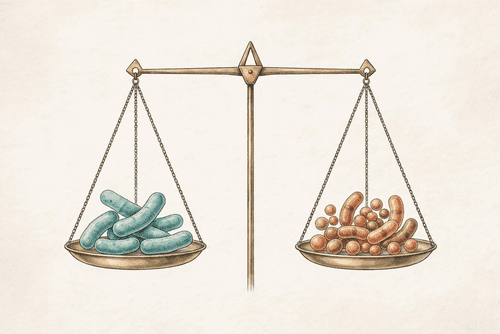
Two look-alikes, two different problems
Neither condition is really an infection you "catch" in the usual sense. Both are disruptions of the vagina's normal balance.
Bacterial vaginosis is an imbalance. The vagina is normally led by healthy bacteria called lactobacilli, which keep it slightly acidic and protected. In BV, those healthy bacteria fall and a mix of other bacteria overgrows. ACOG describes BV as not a true infection. It is linked to sexual activity, but it is not classed as a sexually transmitted infection.
A yeast infection (also called vaginal candidiasis) is an overgrowth of Candida, a fungus that normally lives in the vagina in small numbers. When the balance is disturbed — after antibiotics, in pregnancy, with diabetes, for example — the yeast multiplies and causes symptoms.
The symptom table
These patterns help, but they are clues, not proof:
- Discharge — BV: thin, gray or white (sometimes greenish), often heavier than usual
- Discharge — yeast: thick, white, and lumpy, often described as cottage-cheese-like, usually with little or no odor
- Odor — BV: a strong fishy odor is the hallmark, often stronger after sex or around a period
- Odor — yeast: usually none
- Itching and burning — BV: not typical; some irritation is possible if discharge is heavy
- Itching and burning — yeast: intense itching and burning of the vulva, with redness and swelling, is the hallmark
- No symptoms at all: about half of women with BV have no symptoms; yeast almost always makes itself felt
One more possibility deserves a mention so everything is not forced into two boxes: trichomoniasis is a true sexually transmitted infection that can cause yellow-green discharge and irritation, and it needs treatment for you and your partner. A test sorts this out too.
Why self-treating so often misses
Studies of self-diagnosis show women are wrong about which condition they have surprisingly often — and the treatments do not overlap at all. An antifungal cream does nothing for BV, and BV treatment does nothing for yeast.
CDC guidance is practical about this: an over-the-counter yeast treatment makes sense mainly if you have been diagnosed with a yeast infection before and you are having the identical symptoms again. A first episode, a different-feeling episode, or symptoms that persist or come back after treatment need an exam and a test instead. Douching helps neither condition and raises the risk of BV — please skip it. For the habits that do protect the normal balance, see our earlier post, "How to Attain and Maintain Healthy Vaginal Flora."
How we actually tell — the swab
At a visit, we look at the discharge, check the pH, and examine a sample under the microscope:
- pH: yeast usually leaves the pH normal (4.5 or below); BV raises it above 4.5
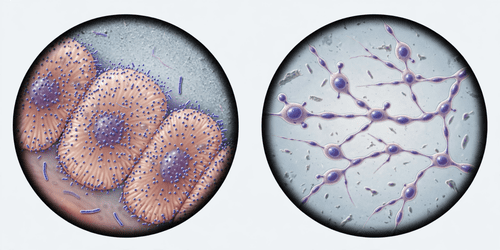
- Under the microscope: yeast shows budding yeast cells and branching threads; BV shows "clue cells" — vaginal cells coated with bacteria
- Modern panel testing: a single swab can check for BV, Candida (including less common species that respond differently), and trichomonas at once
That short visit replaces weeks of guessing with an answer.
How each one is treated
BV is treated with antibiotics — most often metronidazole, as a pill or a vaginal gel, or clindamycin cream. Treatment is recommended when you have symptoms. BV is not harmless to ignore: it raises the risk of catching other infections, and in pregnancy it is linked to early birth, so a persistent fishy discharge deserves a visit rather than repeated home remedies.
Yeast is treated with antifungals — a short course of a vaginal azole cream or suppository, or, for many non-pregnant patients, a single fluconazole pill. About 80 to 90 percent of women who complete treatment get relief. Partners are not treated for either condition as a routine.
Pregnancy changes the choice: for yeast in pregnancy, only a topical azole used for 7 days is recommended — the single fluconazole pill is not used.
When it keeps coming back
Recurrence is common with both, and it is a reason to come in, not to repeat the pharmacy run.
- Recurrent yeast means 3 or more symptomatic episodes in under a year. It can point to a non-albicans Candida species, diabetes, or another factor that changes the plan; the usual approach is a longer first course followed by a maintenance plan.
- Recurrent BV now has an important new option to discuss. In a 2025 New England Journal of Medicine trial, treating the male partner as well — with both oral and topical antibiotics — cut recurrence within 12 weeks from 63% to 35%. Partner treatment was not routine before this study, and guidelines are still catching up, but if BV keeps returning and you have a regular partner, it is worth raising at your visit.
When to just come in
Book a visit if this is your first episode, if you are pregnant, if there is pelvic pain, fever, sores, or bleeding, if symptoms do not clear with treatment, or if they keep returning. BV and yeast are both very treatable — once we know which one it actually is.
If discharge, odor, or itching is bothering you, do not guess a second or third time. Come in for a swab, get the right name for the problem, and get the treatment that matches it.
General patient education only. Treatment choices depend on your history, pregnancy status, and test results.